WHY DOES MY MINI NEED 99RON FUEL?
95RON vs 99RON – Does It Really Make a Difference?
One of the questions we get asked regularly is:
“Do I really need to put 99RON in my MINI?”
And this doesn't just apply to tuned cars. Whether your MINI is completely stock, Stage 1, Stage 2 or beyond we recommend using good quality 99RON fuel wherever possible. Many models are designed to be capable of running on lower octane fuel. However being able to run on something and it being the fuel we'd choose for the engine are two different things. We've seen the difference fuel quality can make first hand, both in the datalogs and on our dyno.
RON stands for Research Octane Number.
The important bit is that a higher octane rating means the fuel has a greater resistance to knock. (uncontrolled combustion occurring inside the cylinder) Modern engines are clever. The ECU constantly monitors what's happening and can make adjustments if it detects combustion isn't behaving as expected.
This is particularly relevant to turbocharged engines such as the B38 and B48 found across the F-series MINI range. If conditions aren't ideal, the ECU can reduce ignition timing and make other corrections to protect the engine.
“My car runs absolutely fine on 95.”
It probably does. But that doesn't mean the engine is operating as it should and definitely doesn't mean the car is happy doing so. We can actually see the difference, this is where datalogging becomes really useful.
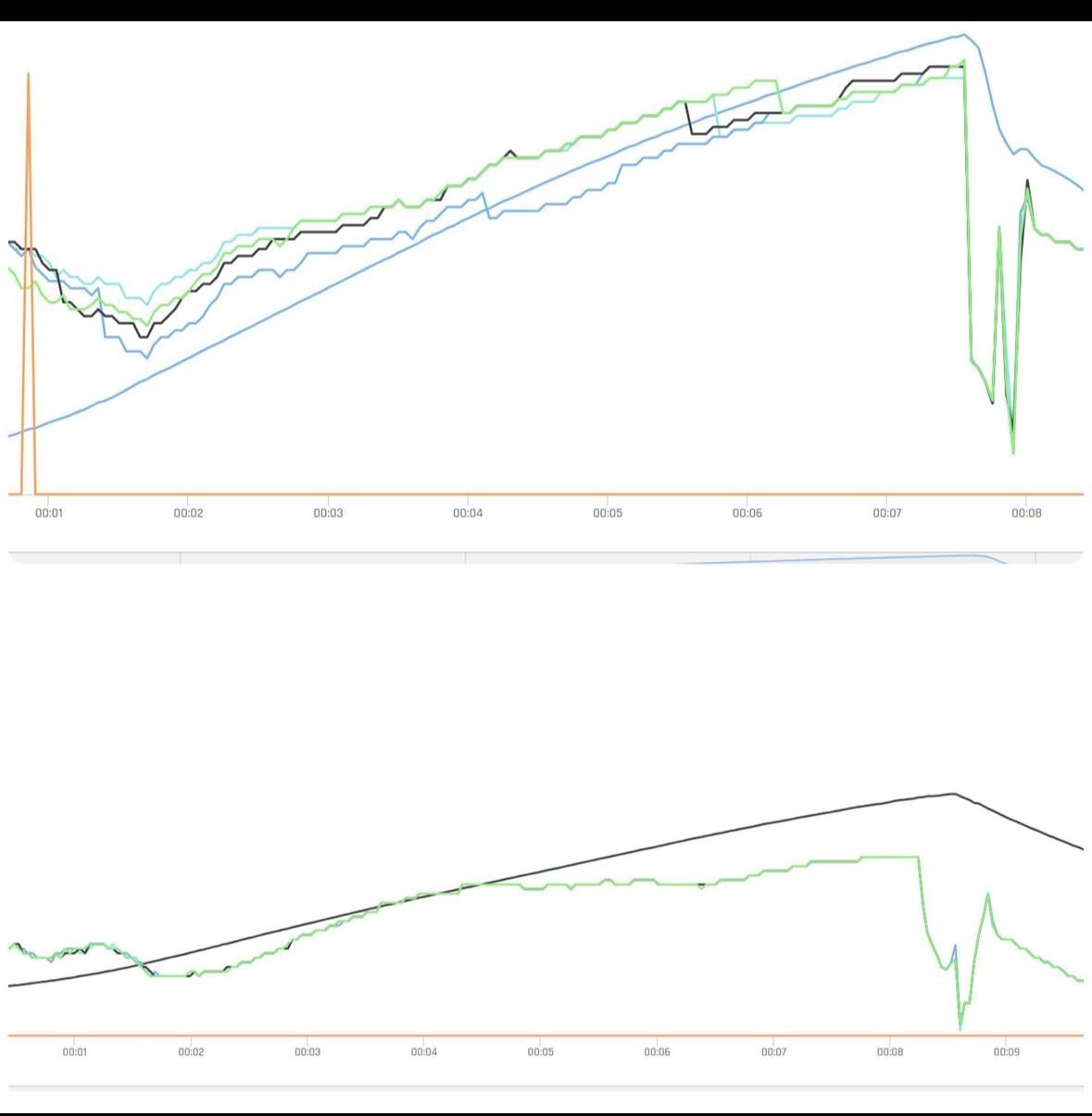
The image above is from testing carried out with different fuel in the car. On 95RON we could see significantly more intervention and correction occurring within the logs. After changing the fuel the behaviour was noticeably cleaner. To the person driving the car normally down the road, there might not have been an obvious problem. There were no dramatic noises or necessarily a warning light telling them “your fuel isn't good enough.”
That's exactly why we spend so much time looking at datalogs rather than judging an engine solely by how it feels from the driver's seat.
And this matters on a completely stock car too. The factory ECU still monitors combustion and has strategies designed to protect the engine when conditions aren't ideal. Better knock resistance gives the engine more opportunity to operate without needing those corrections.
Then we put it on the dyno…
We also carried out a comparison that made the difference incredibly easy to demonstrate.
The same car was tested with 95RON and 99RON while developing our custom Stage 1 calibration.
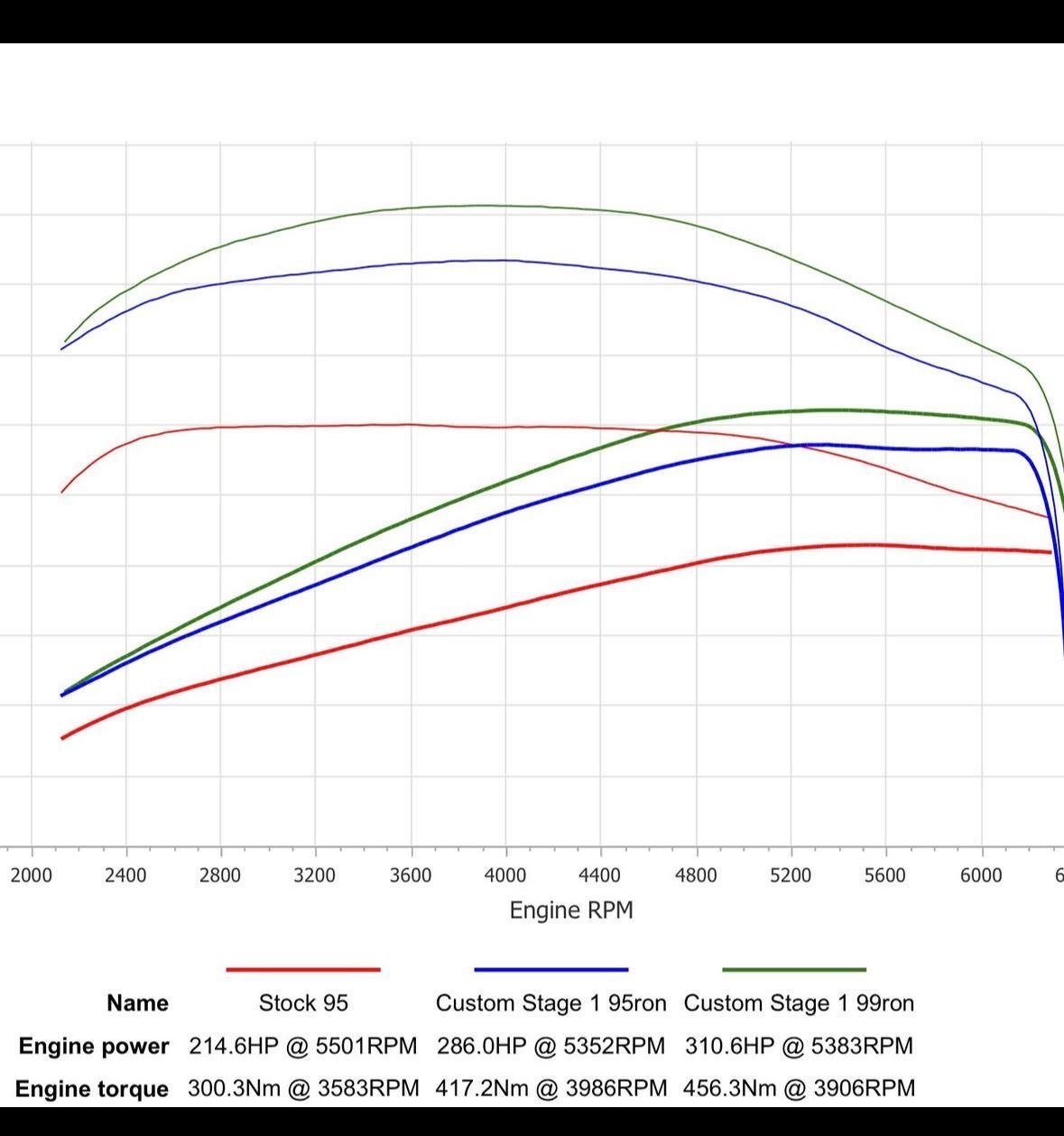
The difference between the two Stage 1 results was:
+24.6HP and +39.1NM on 99RON.
That's a substantial difference from fuel alone. This doesn't mean putting 99RON into every car will suddenly give you an extra 25HP.
The difference here was so pronounced because we were custom tuning the car and could take advantage of the additional knock resistance offered by the higher octane fuel. But it gives a very clear demonstration of something we see repeatedly:
Fuel quality can fundamentally change how much an engine will tolerate before the ECU has to intervene.
So is 99RON worth using on a completely stock MINI?
In our opinion, yes and it's what we use and recommend. A stock ECU is obviously calibrated very differently from one of our tuned cars, so you shouldn't expect the same gains shown in our Stage 1 comparison. But the basic principle hasn't changed. Higher octane fuel provides greater resistance to knock. On an engine capable of adapting to fuel quality, that can mean less ignition correction when the engine is under demanding conditions. Think hot weather, prolonged acceleration, high engine loads or spirited driving.
For someone doing nothing more than pottering around town, the difference may be virtually impossible to feel from behind the wheel.
But for us, fuel isn't somewhere we'd choose to save a relatively small amount of money on a performance orientated turbocharged engine.
What about a tuned MINI?
This is where our recommendation becomes much more important. When we custom tune a car we're calibrating it around the fuel that's actually in the vehicle. If we're tuning it on 99RON, we're able to take advantage of the additional knock resistance that fuel provides while monitoring exactly how the engine responds. Put 95RON into that same car afterwards and the ECU has less knock resistance to work with. The engine has protection strategies, but we'd much rather give it the fuel the calibration was developed to use than deliberately make those protection strategies work harder.
And then there's octane booster…
This is another one we've actually tested rather than simply repeating something we've read online. Octane booster can be useful when good quality 99RON isn't readily available. Different products have different formulations and dosing requirements, so you can't assume every bottle claiming to be an “octane booster” will have the same effect. But with a suitable product used at the correct concentration, the aim is to increase the effective octane rating of the fuel and therefore improve its resistance to knock. And again we've seen the difference ourselves.
The second graph demonstrates just how much additional performance became available as the fuel's knock resistance improved. It gave Chris considerably more room to work with the calibration before reaching the limitations imposed by the fuel.
Should I just use 95RON and add octane booster every time?
If you have easy access to good quality 99RON, we'd simply fill the car with 99RON. Octane booster is something we see as particularly useful when circumstances dictate it. Maybe you're travelling somewhere and can't find 99RON. Perhaps you're abroad where the available fuel is different. Or you live somewhere where higher octane pump fuel simply isn't readily available. In those situations, a reputable and correctly dosed octane booster can be extremely useful.
We highly recommend Lucas Oil Octane Booster - This can be purchased from us at our garage premises.
What if I accidentally put 95RON in?
Don't panic. If your standard MINI is approved by the manufacturer to run on 95RON, filling it with 95 isn't suddenly going to cause a catastrophic engine failure but it won't be happy. If you have a tuned car that's specifically calibrated for 99RON and you're caught somewhere that only sells 95, we'd rather you put fuel in than run out. In that situation we'd recommend filling just enough to get you to a garage that sells 99RON, taking it easy, avoiding sustained full throttle/high load driving and topping it back up with 99RON.
Why are we so fussy about it?
Because we get to see what most drivers don't. You see a petrol pump saying 95 or 99. We see what's happening inside the ECU when the engine is under full load. We can see ignition corrections. We can see knock control. We can see temperatures, boost, fuelling and how the engine responds as conditions change. And we've tested the difference on the dyno.
In our example the same Stage 1 car produced:
95RON – 286.0HP / 417.2Nm
99RON – 310.6HP / 456.3Nm
That's 24.6HP and 39.1Nm difference.
We wouldn't expect that increase simply from filling a completely standard car with 99RON and that's an important distinction.
But it demonstrates perfectly why octane matters and why the fuel going into the tank is another variable we take seriously.
So whether your MINI is completely standard or heavily modified our preference is the same:
Fill it with good quality 99RON whenever it's available.
You might not physically feel a difference every time you leave the petrol station but from what we've seen in the datalogs and during our own testing your car will be happier, healthy and be running a lot more efficiently.